Horse Fence Guide
No-Climb Wire vs Board Fence for Horses: What Works on Marion County Farms
How the two most common horse fences compare on safety, visibility, upkeep and Florida weather, and why so many Ocala farms end up using both.
Published Oct 21, 2026
•
Updated Oct 26, 2026
•
7 min read
2″ x 4″
No-climb mesh opening
Board
Most visible to horses
Top board
The common combo
In-house
Install crews
Free estimate
Get a fence quote for your property
We walk your fence line and quote it for free.
Or call 352-245-1775
The short answer
For most horse pastures, no-climb wire is the safer everyday fence because its 2″ x 4″ mesh keeps hooves and legs from going through, while board fence is easier for horses to see and looks best along a driveway or road. Many Marion County farms use both: no-climb wire with a top board for pastures and perimeters, and board or crossbuck fencing out front.
Key takeaways
- No-climb wire keeps hooves, legs and noses from passing through, which makes it a strong choice for foals, minis and turnout with several horses.
- Board fence is the easiest fence for a horse to see and gives a farm its classic look, but boards can break, get chewed and need paint.
- A top board on no-climb adds the visibility of board fence, stiffens the top of the wire and helps stop leaning and pushing.
- In Florida sun, rain and sandy soil, deep-set posts and good bracing matter more than which fence you pick.
- Plan it by area: board or crossbuck where people see it, no-climb with a top board where horses live.
The basics
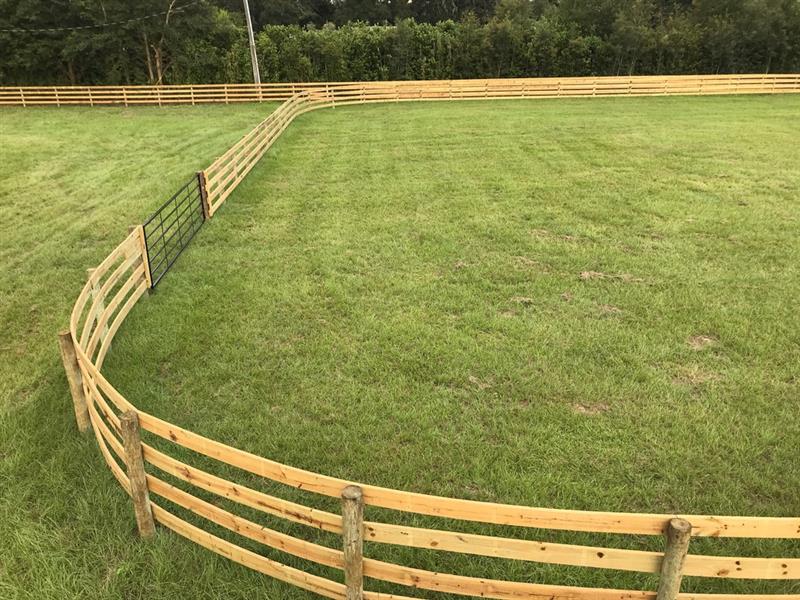
What is the difference between no-climb wire and board fence?
Compare
No-climb vs. board fence at a glance
Both fences work for horses. They just solve different problems. Here is how they compare side by side.
| Category | Board fence | No-climb wire |
|---|---|---|
| Keeping legs out | Gaps between boards | Mesh too small for a hoof |
| Visibility | Very easy for horses to see | Hard to see without a top board |
| Strength under pressure | Boards can crack or pop loose | Wire flexes and springs back |
| Chewing | Horses may chew the boards | Nothing to chew on the wire |
| Upkeep | Paint and board replacement | Check tension and posts |
| Relative cost over time | Higher, with paint and repairs | Lower to maintain |
| Best for | Front pastures, driveways, roadside | Turnout, foals, minis, perimeters |
Safety
Which fence is safer for horses?
Safety comes down to two questions: can the horse see the fence, and can it get a leg caught in it? Board fence wins the first. No-climb wire wins the second.
Where board fence is safer
- Horses see it from across the pasture
- Easy to judge at a gallop
- No wire edges anywhere on the fence
- Good for horses new to a property
Where no-climb is safer
- Hooves and legs cannot pass through
- No broken boards with sharp ends
- Flexes when a horse leans or runs into it
- Keeps out dogs and small wildlife
The biggest risk with board fence is a broken board. A horse that kicks or leans can crack one, and the broken end can cause an injury. The biggest risk with plain no-climb is that a horse running hard may not see it. That is the reason so many owners add a top board.
Not sure which fence fits your pasture?
We will walk your property and recommend the right fence for each area. Call for a free estimate!
The combo
Why many Marion County farms use no-climb with a top board
A board along the top of no-climb wire gives you most of the safety of both fences in one run.
- Visibility. The board gives horses a clear line to see at eye level.
- A stiffer top. It holds the top of the wire straight and stops it from bowing or sagging.
- Less leaning and pushing. Horses that reach over a fence put their weight on the board instead of the wire.
- A protected top edge. The board covers the top wire so there is no edge for a horse to rub against.
- A finished look. It looks closer to a board fence from the road, at a lower upkeep.
We recommend a top board for horse properties, roadside fencing and anywhere visibility matters. It is the setup we build most often on working horse farms around Ocala.
Florida weather
How each fence holds up in Florida sun, rain and sand
Central Florida is hard on any fence. Heat, summer storms, humidity and sandy soil all work on it year round. A few build details matter more than which fence you choose.
- Deep-set posts. Sandy soil gives less grip, so posts need to go deep and be packed tight to stay plumb after heavy rain.
- Braced corners and gates. Corners carry the pull of a tight wire fence. Good bracing keeps no-climb from sagging over time.
- Pressure-treated wood. Posts and boards rated for ground contact last far longer in Florida humidity.
- Paint on board fence. Florida sun dries and weathers boards. Paint protects them and keeps the fence looking sharp.
- Tight wire. No-climb that is stretched and tensioned correctly stays straight through heat and storms.
If you already have a board fence, our post on why 4-board farm fencing works so well in Central Florida covers how to get the most life out of it.
Your property
Which fence fits each part of your property?
Most horse farms do not need one fence everywhere. Match the fence to how each area is used.
1
Front of the property and driveway
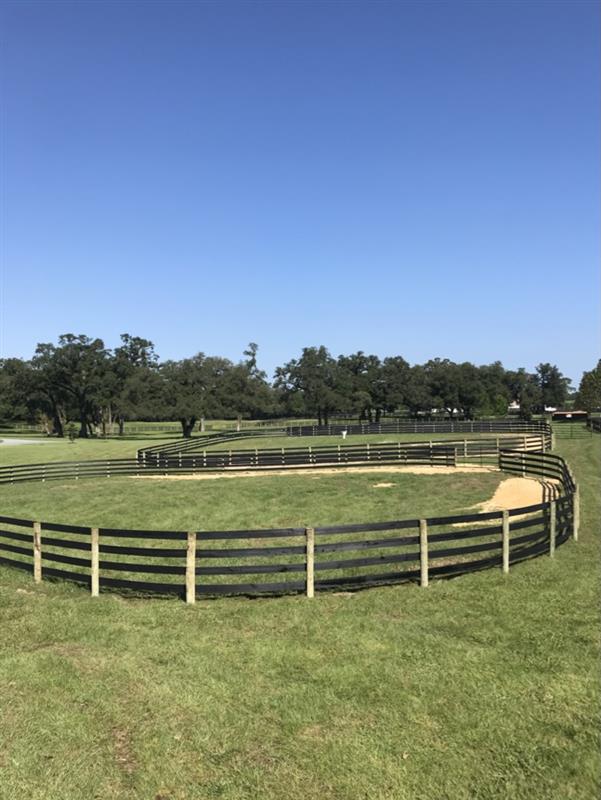
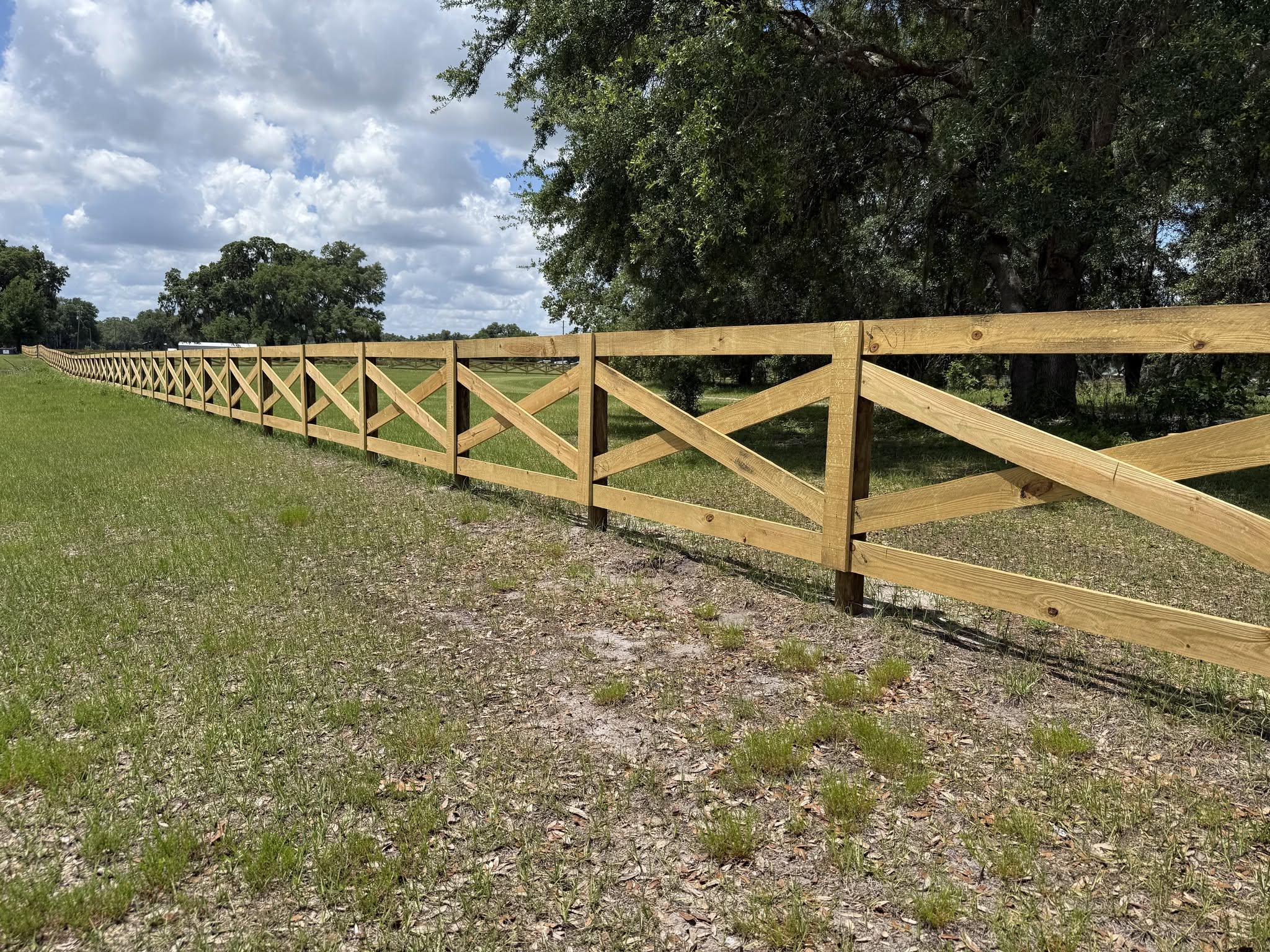
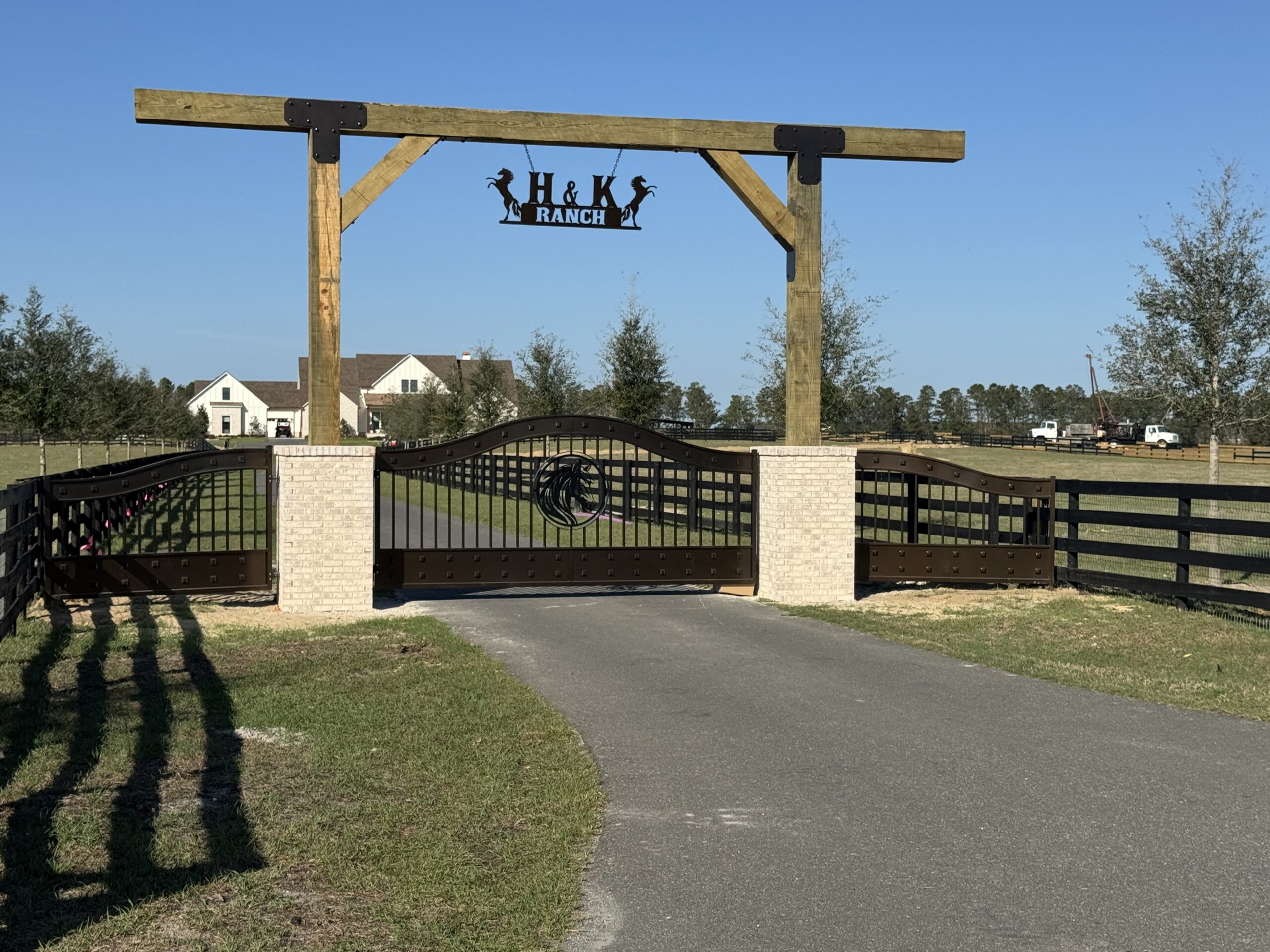
Board or crossbuck fencing makes the best first impression and is easy to see from the road.
2
Pastures and turnout
No-climb wire with a top board keeps legs out of the fence and gives horses a clear line to see.
3
Foals, minis and mixed animals
No-climb is the safer choice where small hooves, dogs or other animals share the space.
4
Long perimeter runs
No-climb on wood posts covers long distances well and needs less upkeep than board over many acres.
Our farm fence installation team in Ocala can lay out a plan that uses each fence where it works best, along with the gates you need between pastures.
FAQ
Frequently asked questions
Is no-climb or board fence better for horses?
For pastures and turnout, no-climb wire is usually safer because its 2″ x 4″ mesh keeps hooves and legs from passing through. Board fence is easier for horses to see and looks best out front. Many farms use no-climb with a top board to get the benefits of both.
Can horses get hurt on no-climb wire?
No-climb is one of the safest wire fences for horses. The small openings keep legs out and the woven knots leave no sharp ends facing the pasture. The main risk is visibility, which a top board solves.
Do I need a top board on no-climb fence?
It is not required, but we recommend it for horses. A top board makes the fence easy to see, keeps the top of the wire straight and stops horses from leaning on the wire.
Why do horses chew board fences?
Horses chew wood out of boredom or habit, and fence boards are an easy target. No-climb wire gives them nothing to chew. On a board fence, keeping boards painted and in good repair helps.
Do you install horse fencing near Ocala?
Yes. Our own crews install no-climb, board, crossbuck and specialty horse fencing across Ocala, Marion County, Summerfield, Williston, Morriston and the surrounding areas. Call 352-245-1775 for a free estimate.
About the installer
Southern Pro Fence & Gate
We are a locally owned fence company run by 4th and 5th generation Floridians, building fences across Florida since 2013. Our own crews install farm and ranch fencing, custom gates, and residential privacy, aluminum, vinyl and chain link fences from our home base in Summerfield.
We serve Ocala, Marion County, The Villages, Sumter County and the surrounding areas of Central Florida.
2013
Serving Florida since
5.0
Google rating
In-house
Install crews
Summerfield
Locally owned
★★★★★
“Southern Pro built me a beautiful wood post and wire fence with a top board. ... They clearly take pride in their work.”
Christine Tomcho
Southern Pro Fence customer
Get started
Ready to fence your horse property?
Tell us about your pastures and your horses, and we will recommend the right fence for every part of your farm. Call for a free estimate!