Best Fencing Options for Large Rural Properties in Central Florida
Fencing a large rural property is a very different project from enclosing a typical residential backyard. When a fence line stretches across acres of pasture, farmland, or open property, every decision about materials, layout, gates, and installation becomes more important.
Central Florida landowners also have local conditions to consider. Sandy soil, heavy rain, heat, humidity, storms, livestock pressure, vegetation, and the sheer amount of fence required can all influence which system makes the most sense. A beautiful fence may be perfect around an entrance or horse pasture but unnecessarily expensive around hundreds or thousands of feet of remote property line. Likewise, an economical perimeter fence may not provide the visibility or safety needed in areas frequently used by horses.
The best solution is often a fencing plan that matches different parts of the property with the job each fence needs to perform. Understanding the strengths of board, wire, livestock, and specialty fencing can help Central Florida landowners build a system that works across the entire property.
Board Fencing for a Classic Florida Farm Look
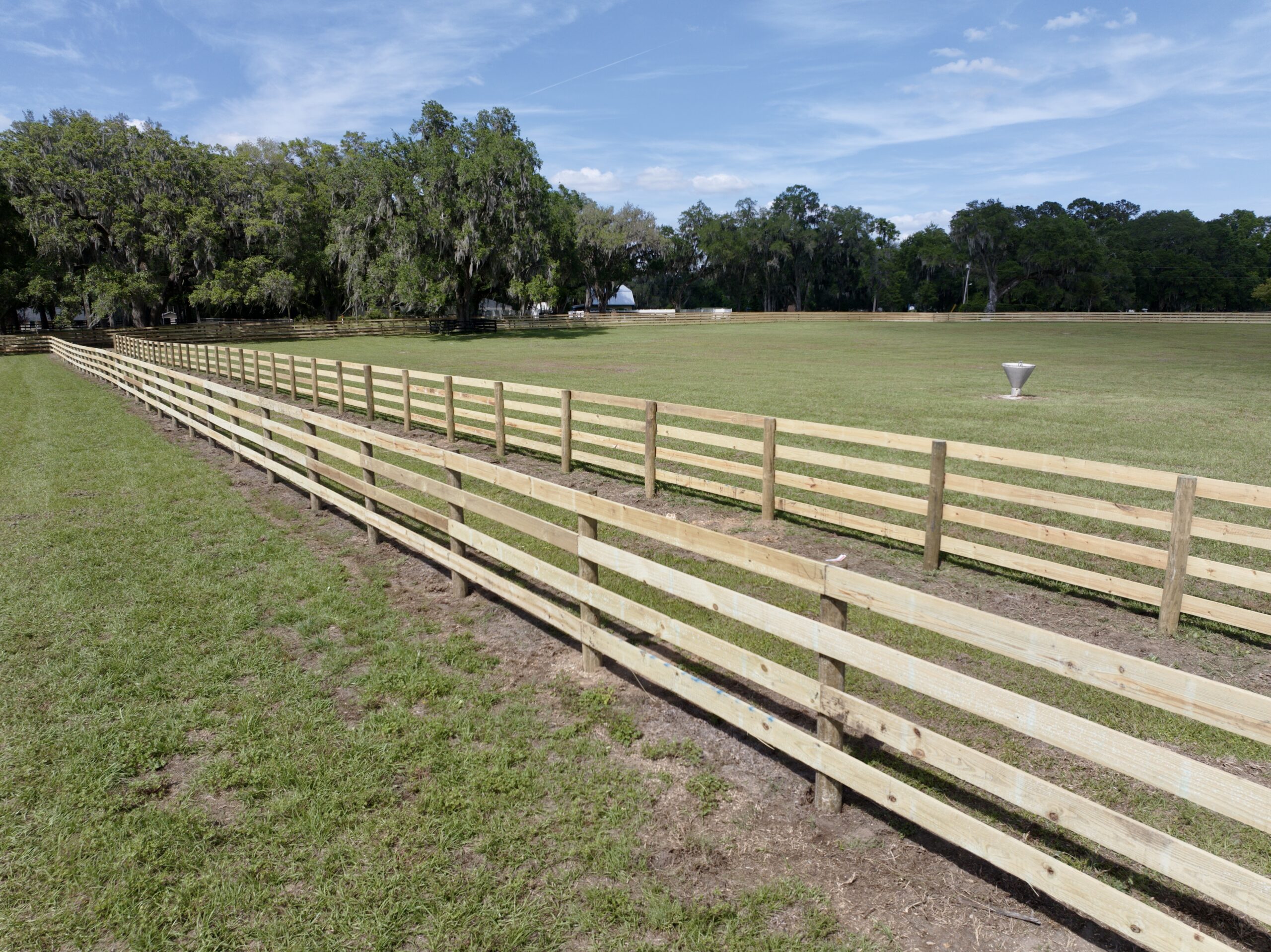
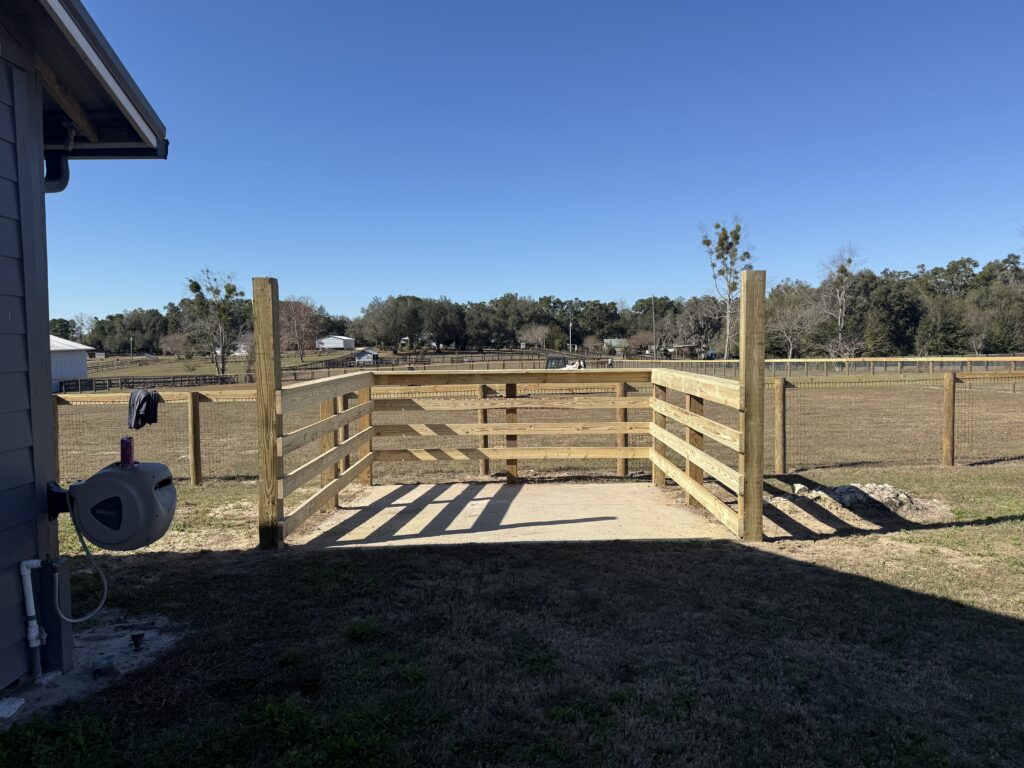
Board fencing remains one of the most recognizable choices for farms, ranches, and equestrian properties throughout Central Florida. It creates a highly visible boundary while giving large properties the clean, traditional appearance many landowners want along roads, driveways, pastures, and prominent areas of the property.
Southern Pro Fence installs both 3-board and 4-board farm fencing using southern yellow pine or vinyl in 6- or 8-foot sections. A 3-board layout can provide strong visibility and reliable containment for horses, while a 4-board design adds another horizontal rail for greater enclosure and a more substantial appearance.
For large acreage, board fencing can also be used strategically. A property owner may choose it around horse pastures, along the front boundary, or near the main entrance while using a more economical wire system along less visible stretches of perimeter. This approach can preserve the classic farm appearance where it has the greatest visual impact without requiring the same material across every foot of the property.
Crossbuck fencing offers another option when appearance is particularly important. Its diagonal board pattern adds reinforcement while creating a distinctive look that works well around entrances, horse properties, and other highly visible areas.
Wire Fencing for Large Acreage and Livestock
When hundreds or thousands of feet of property need to be enclosed, efficiency becomes a major part of the fencing decision. Wire systems can provide dependable containment and perimeter definition while making it practical to fence significantly larger areas.
The right type of wire depends on what the fence needs to contain. Field and high-tensile wire can work well for agricultural applications and larger livestock, while barbed wire is a proven option for cattle operations, remote boundaries, and large open pastures where broad coverage and cost efficiency are priorities. Southern Pro installs barbed and field wire between solid posts with reinforced bracing at high-stress areas to help maintain proper tension and long-term stability.
No-climb wire serves a different purpose. Its tight mesh openings are designed to reduce the chance of hooves, paws, or noses becoming caught in the fence, making it particularly useful for horses and active farm environments. Adding a top board increases visibility and creates a more finished appearance while maintaining the practical coverage of wire.
For a large rural property, these systems can also work together. No-climb may make sense around horse paddocks and heavily used areas, while field or barbed wire may be more appropriate for cattle pastures or distant perimeter boundaries. Matching the material to each section of land can create a more efficient overall fencing plan.
Choose Fencing Based on the Animals and Property Use
A large property should not be fenced based on acreage alone. The animals living on the property—and the way the land is managed—should play a major role in determining which fence belongs where.
Horse properties typically prioritize visibility and reducing opportunities for injury. Board fencing and no-climb wire with a top rail are popular options because they create clearly visible boundaries, while tight-mesh no-climb wire helps reduce the risk of a hoof becoming caught. Barbed wire, on the other hand, is generally not appropriate for horses because contact can cause serious injuries.
Cattle operations have different requirements. Field wire, high-tensile systems, and barbed wire can provide practical containment across larger pastures, particularly when strong posts, proper tension, and reinforced corners are incorporated into the installation. Properties with goats, sheep, or smaller animals may require tighter openings and different fence heights to prevent animals from slipping through or challenging the fence.
Land management matters too. Multiple pastures can make rotational grazing easier, while dedicated holding areas, round pens, arenas, and smaller paddocks may require fencing different from the outer property boundary.
Instead of asking which single fence is best for the entire farm, determine what each area needs to accomplish. That approach can improve animal safety while avoiding unnecessary material costs in areas where a simpler system can perform the job effectively.
Plan Gates, Access Points, and Fence Layout Carefully
On a large rural property, the location of the fence matters almost as much as the material. A poorly planned layout can make routine work unnecessarily difficult even when the fence itself is built correctly.
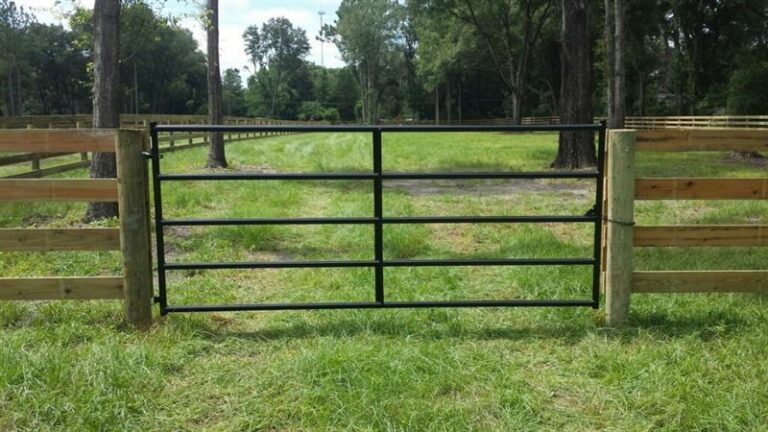
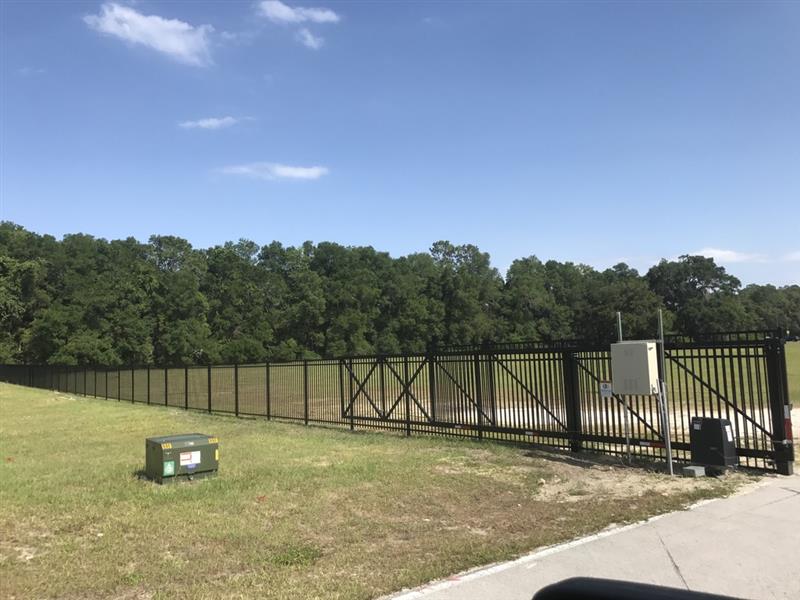
Think about how people, livestock, trucks, tractors, trailers, mowers, and other equipment move through the property. Main entrances may need wide gates that comfortably accommodate trucks and trailers, while pastures may need additional access points for equipment, animal movement, or emergency situations. A gate that technically fits today’s equipment can quickly become frustrating if future machinery is wider or requires more turning room.
Pasture layout deserves the same attention. Strategic cross-fencing can divide large areas into more manageable sections and support rotational grazing or separation of livestock. Holding areas can be positioned near barns or working areas, while heavily traveled routes should be designed to minimize unnecessary opening and closing of gates.
Fence lines should also account for terrain, vegetation, drainage, existing structures, and areas that may be developed later. Clearing and preparing the intended fence line before installation can make construction more efficient and help establish a cleaner, more accessible boundary.
A thoughtful layout turns fencing into part of the property’s infrastructure rather than simply a barrier around its edge.
Build the Right Fence for Your Central Florida Property
Large rural properties require fencing designed around the land—not a one-size-fits-all solution. The right combination of board fencing, no-climb wire, field or barbed wire, specialty fencing, and properly placed gates can create a property that is safer for livestock, easier to manage, and built for long-term use.
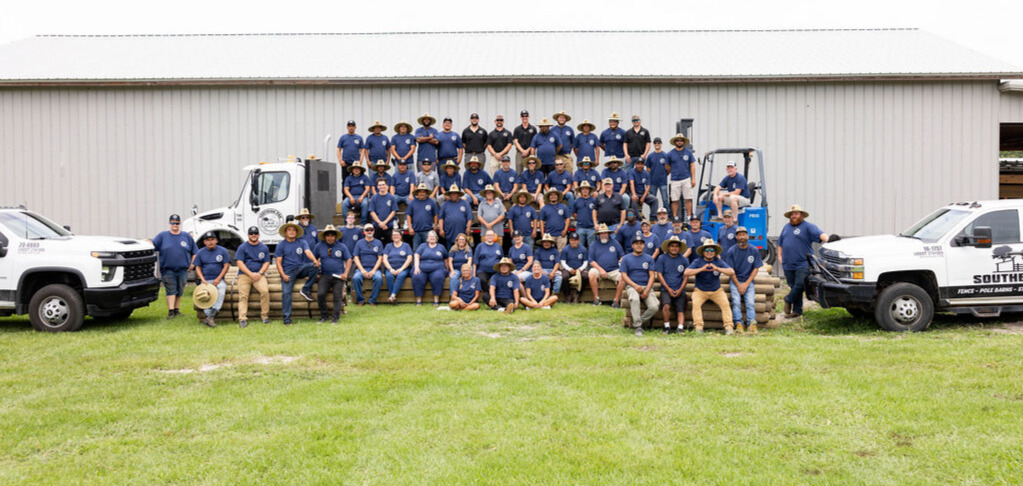
Southern Pro Fence has installed farm fencing throughout Central Florida since 2013. Our local crews understand the challenges created by Florida soil, weather, livestock, and large acreage, and we build each project around the specific needs of the property.
Whether you are fencing a horse farm, cattle operation, pasture, or rural property boundary, contact Southern Pro Fence for a free estimate and start planning a fencing system built for your land.