
Hinge post
Carries the whole gate
Braced
Posts that share the load
Level
Hinges set plumb
In-house
Install crews
Free estimate
Get a fence quote for your property
We walk your fence line and quote it for free.
Or call 352-245-1775
The short answer
Most farm gates sag because the hinge post is moving, not because the gate is bent. A post that is too small, too shallow or unbraced slowly leans under the gate’s weight, and sandy or wet soil speeds that up. A gate that won’t sag starts with a large, deep-set, braced hinge post, a square gate frame and hinges set plumb so the gate swings level.
Key takeaways
- The hinge post does the work. A small lean at the ground becomes a big drop at the latch end.
- Sandy, wet soil lets posts move. Deep holes and firm packing keep a post plumb after heavy rain.
- Bracing shares the load. An H-brace ties the hinge post to the next post so they carry the gate together.
- Quick fixes buy time. Adjusting hinges helps, but a leaning post usually needs to be reset or replaced.
The basics
Why do farm gates sag?
A gate hangs off one side of a single post, so all of its weight, plus every push and slam, pulls on that post. Think of the gate as a lever. If the top of the post tips even slightly, the far end of the gate drops a lot more, and soon it is dragging in the dirt or missing the latch.
On farms and ranches around Ocala, we see the same causes again and again:
- A hinge post that is too small for the gate's width and weight.
- A post set too shallow, with too little soil holding it upright.
- No bracing, so one post carries the whole gate alone.
- Sandy or soggy soil that loosens around the post after heavy rain.
- Hinges that are not plumb or are spaced too close together.
- A gate frame that is not square or has no diagonal brace.
Diagnose it
Is it the gate post or the gate itself?
Before you fix anything, figure out what is actually moving. Put a level on the hinge post, then on the gate frame. The answer tells you whether you need a small adjustment or a bigger repair.
Signs your gate post is failing
- The hinge post leans toward the opening
- Soil has cracked or pulled away around the base
- The post rocks when you push the gate
- The sag got worse after heavy rain
Signs it is the gate itself
- The post is plumb, but the gate is not square
- Diagonal measurements across the frame do not match
- Loose, bent or worn hinges
- Broken welds or a bent tube or rail
In our experience, the post is the culprit far more often than the gate. If the post has moved, adjusting the hinges only hides the problem.
Got a gate that drags or won't latch?
We will look at the post, the hinges and the gate and tell you whether it needs a fix or a rebuild. Call for a free estimate!
The foundation
How to set gate posts that stay put in sandy soil
Central Florida does not have frost heave, but it has something just as hard on gate posts: loose sand and summer rain. Sand gives a post less grip, and water can soften the ground around the base. That makes post size, depth and packing the most important part of the job.
- Go bigger on the hinge post. UF/IFAS Extension guidance for livestock fence calls for corner posts about 6 to 8 inches across set roughly 4 feet deep. A post holding a wide gate is under at least as much strain.
- Set it plumb and pack it in layers. Check the post with a level on two sides and tamp the backfill tight every few inches. Some posts also get concrete, depending on the soil and the gate.
- Use ground-contact wood or steel that stands up to Florida moisture, and grade the area so rain does not puddle against the post.
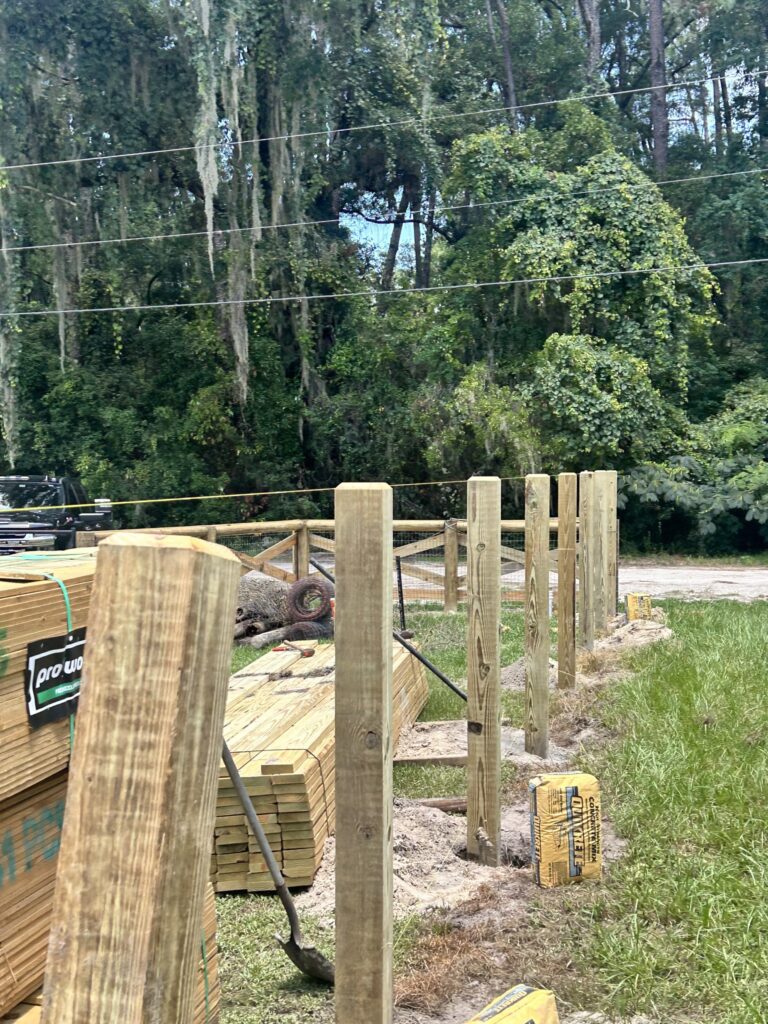
Next comes bracing. An H-brace ties the hinge post to a second post with a horizontal rail and a tightened diagonal brace wire, so both posts share the gate’s weight. Extension fence guides place the brace post about 8 to 10 feet from the post it supports. On a busy entrance, it is the best insurance against sag you can build in.
Step by step
How to build and hang a gate for a fence so it won't sag
Whether you are building a wood gate or hanging a metal farm gate, the order of the work matters. Here is how we approach it.
1
Size the gate for what goes through it
Measure for the biggest truck, trailer or tractor that will use the opening, then pick a gate width and weight the posts can carry. Our post on ranch gates built for daily use on working properties covers sizing and placement in more detail.
2
Set and brace the hinge post first
Set it deep, plumb and packed tight, and brace it to the next post before the gate goes on.
3
Build or check a square frame
For a wood gate, measure corner to corner both ways. Matching numbers mean it is square. Add a diagonal brace so it cannot rack out of shape.
4
Mark and set the hinges
Space the top and bottom hinges as far apart as the gate allows, with the bottom hinge set plumb below the top one.
5
Hang the gate with ground clearance
Leave a few inches under the gate, and more on a slope so it does not catch as it swings. Adjustable hinges make fine-tuning easier.
6
Set the latch and support the free end
Hang the latch with the gate level and closed. A sturdy latch post or gate stop keeps the free end from hanging on the hinges alone.
Repair or rebuild
Quick fixes vs. a full rebuild
If the post is solid and plumb, a sagging gate can often be fixed in an afternoon.
- Adjust the hinges. Adjustable hinge bolts can raise the latch end back to level.
- Add an anti-sag kit. A cable and turnbuckle run corner to corner pulls a wood gate back into square.
- Add a gate wheel. A wheel under the latch end takes some weight off the hinges on long or heavy gates.
- Replace worn hardware with hinges matched to the gate.
If the post leans, rocks or is rotting at the ground, those fixes will not last. The post needs to be reset deeper, braced or replaced. When the gate also has broken welds or a twisted frame, it is usually time for a new gate on new posts.
Built to last
Why a professional gate install holds up
A gate gets opened and closed thousands of times, and every swing tests the post, the bracing and the hardware. Getting those right on day one is what keeps a gate level years later.
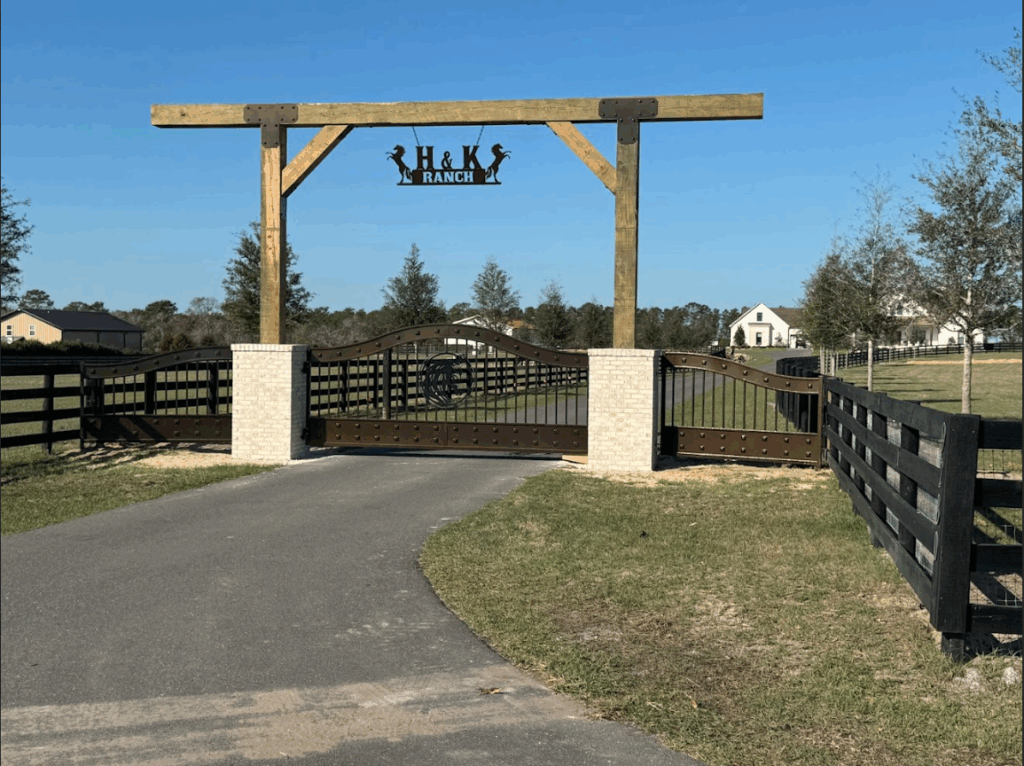
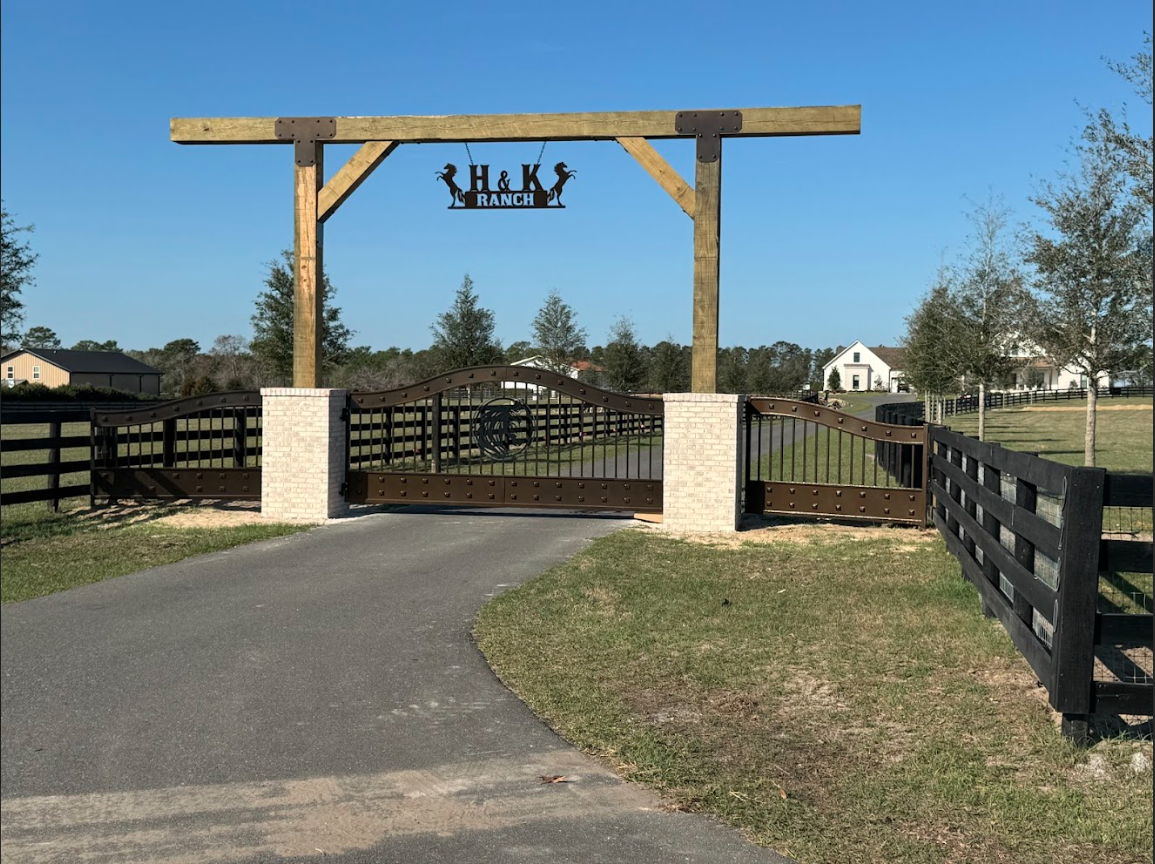
Our in-house crews build custom gates in Ocala on posts sized and braced for each gate, and we match them to the fence around them, from board to no-climb wire. If your gate is part of a bigger project, our farm fence installation team can plan the gates, corners and bracing together so the whole farm fence stays tight and straight.
FAQ
Frequently asked questions
How do you fix a sagging farm gate?
Check the hinge post with a level first. If it is plumb, adjust the hinges, replace worn hardware, add an anti-sag cable to a wood gate or add a gate wheel. If the post leans or rocks, it needs to be reset, braced or replaced, or the sag will come back.
How deep should a gate post be?
Deeper than a regular line post. UF/IFAS Extension guidance for livestock fence sets corner posts about 4 feet deep, and a hinge post holding a wide gate deserves the same care. Soil, gate size and weight all play a part, so we size posts for each gate.
Does a gate post need a brace?
For most farm and ranch gates, yes. An H-brace ties the hinge post to the next post so both carry the gate’s weight and the post does not lean over time.
How much ground clearance should a farm gate have?
Enough to clear the ground through the whole swing. A few inches works on flat ground, and gates on a slope need more.
Do you install and repair gates near Ocala?
Yes. Our own crews build and hang custom farm, ranch, driveway and livestock gates across Ocala, Marion County, Summerfield and the surrounding areas. Call 352-245-1775 for a free estimate.
About the installer
Southern Pro Fence & Gate
We are a locally owned fence company run by 4th and 5th generation Floridians, building fences across Florida since 2013. Our own crews install farm and ranch fencing, custom gates, and residential privacy, aluminum, vinyl and chain link fences from our home base in Summerfield.
We serve Ocala, Marion County, The Villages, Sumter County and the surrounding areas of Central Florida.
2013
Serving Florida since
5.0
Google rating
In-house
Install crews
Summerfield
Locally owned
★★★★★
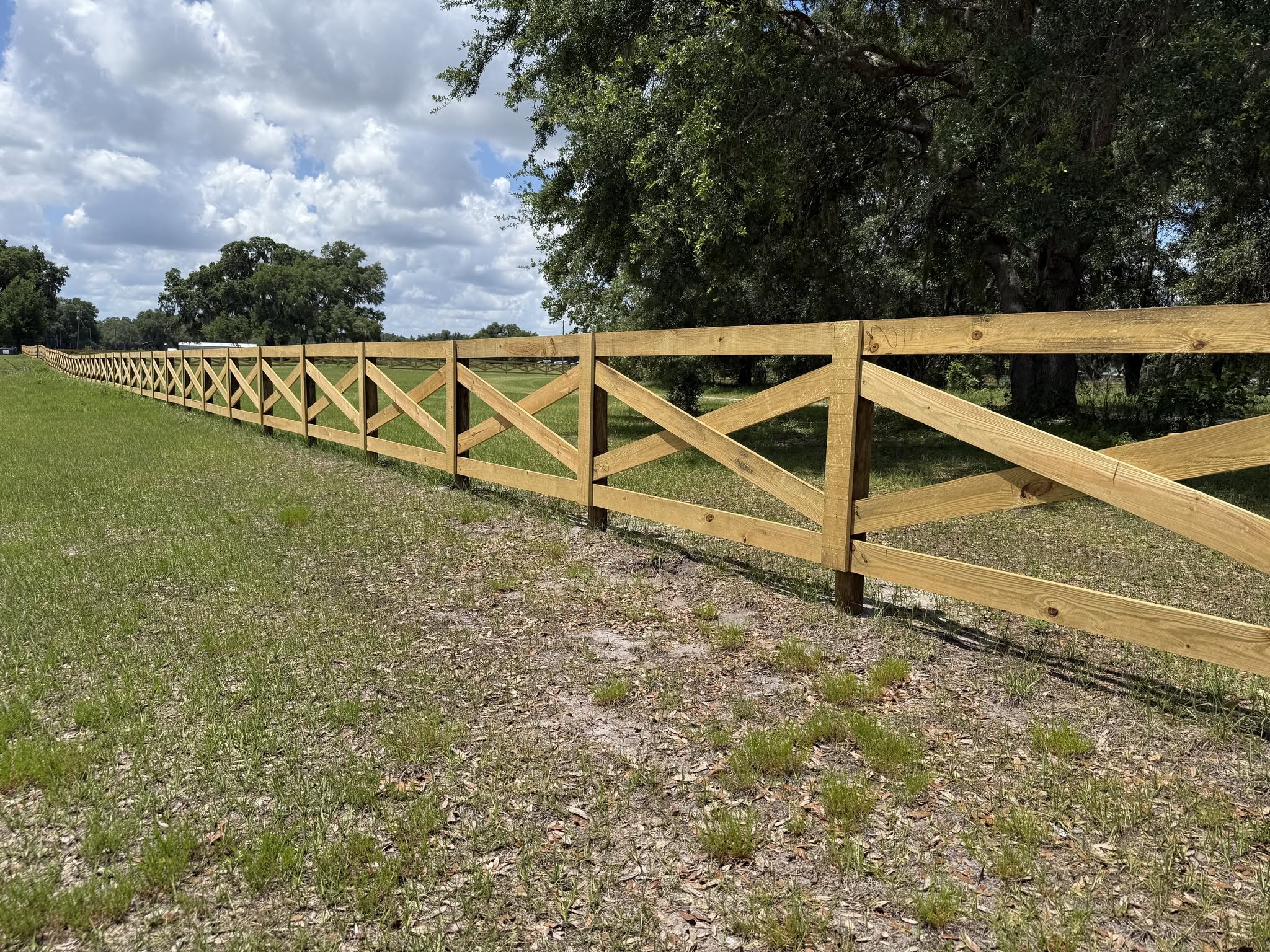
“Southern Pro built me a beautiful wood post and wire fence with a top board. ... They clearly take pride in their work.”
Christine Tomcho
Southern Pro Fence customer
Get started
Ready for a gate that stays level?
Tell us about your gate, your equipment and your animals, and we will build and hang a gate made to last. Call for a free estimate!